Vietnamese Coffee in Kanpur:
What It Is and What to Order
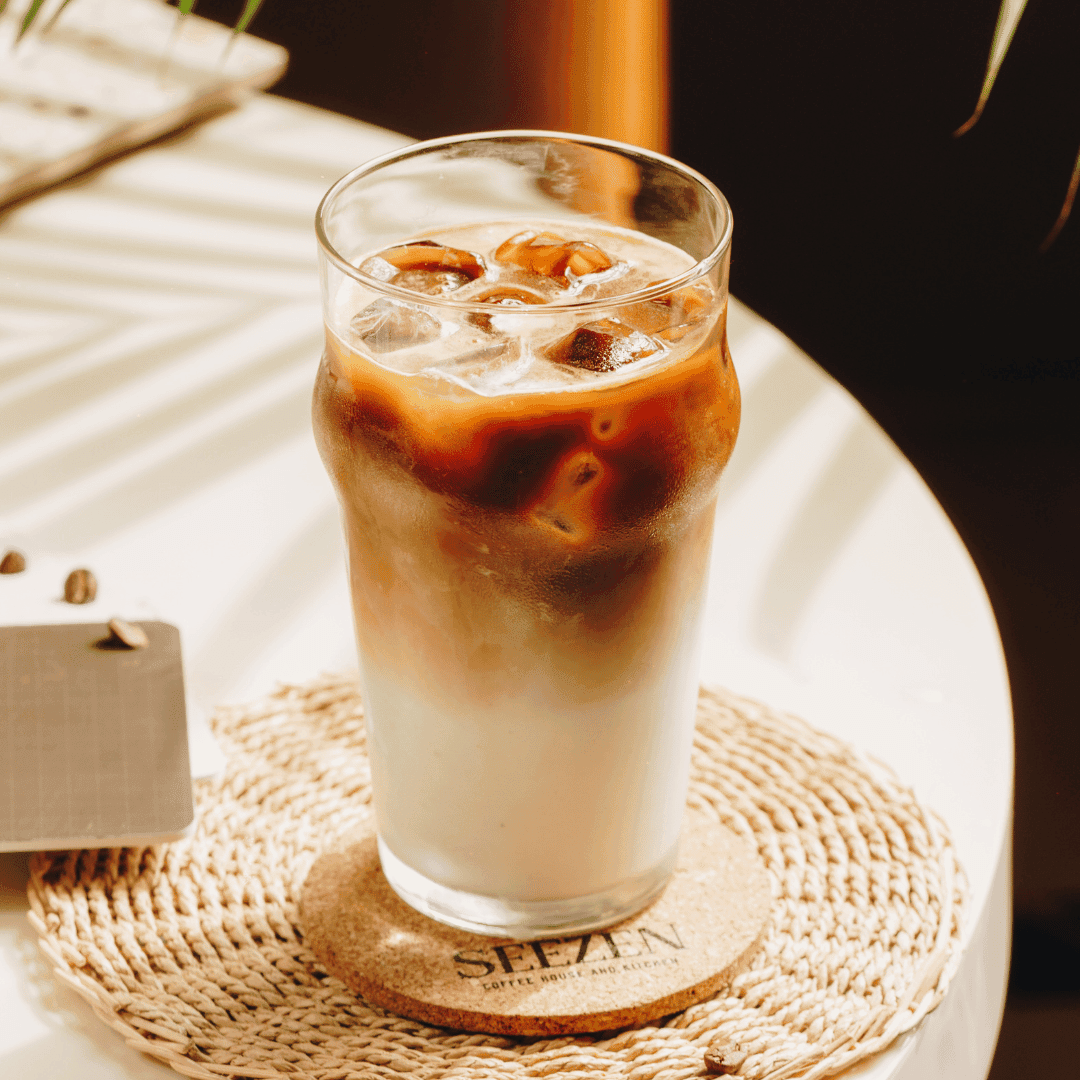
Vietnamese coffee in Kanpur usually means Vietnamese iced coffee: a strong, dark coffee dripped slowly and sweetened with condensed milk, then poured over ice. It is bolder than an Indian cold coffee and sweeter than an iced Americano, and at Seezen in Civil Lines it costs ₹260 (menu price, 2026).
Vietnamese coffee chains have started opening in Indian cities over the past year, so more people are seeing the name on menus and wondering what they are ordering. This guide explains where the drink comes from, why it tastes the way it does, how it compares with the coffees you already know, and what to pair it with.
Quick answer
Vietnamese coffee is traditionally robusta, brewed drop by drop through a small metal phin filter and mixed with sweetened condensed milk over ice. The classic is stronger, sweeter and less milky than Indian cold coffee. In Kanpur, Seezen's Vietnamese iced coffee is ₹260 (2026 menu price); ask staff about sweetness.
Vietnamese coffee at a glance
| What it is | Strong dripped coffee + sweetened condensed milk, usually over ice |
| Traditional bean | Robusta, dark roasted |
| Brewer | Phin, a small metal drip filter that sits on the glass |
| Taste | Bold, slightly bitter, caramel-sweet |
| Strength | Usually stronger than a latte or cold coffee |
| Price at Seezen | ₹260 (menu price, 2026; may change) |
| Best for | Strong-coffee lovers who still like it sweet; afternoon pick-me-up |
What is Vietnamese coffee, and where does it come from?
Vietnamese coffee is a style of strong, slow-dripped coffee that grew out of Vietnam's café culture, where coffee is a daily social ritual. According to the Michelin Guide, French colonists introduced coffee in the mid-19th century. Chowhound adds that fresh milk was scarce, so cafés relied on condensed milk, which keeps far longer, and that robusta farming spread through the Central Highlands around 1900. Today Vietnam is the world's second-largest coffee producer after Brazil.
The brewer matters as much as the bean. A phin is a small metal cup with a perforated base and a lid that sits on top of the glass. Hot water drips slowly through the grounds, which takes a few minutes, and there is no paper filter, so more of the coffee's oils and body reach the cup. The Takeout describes it as somewhere between a pour-over and a French press.
The drink is now travelling. Vietnamese chain Three O'Clock had opened its seventh Indian café, in Surat, by January 2026, after starting in Gurugram, according to Restaurant India, and QSR Media reported that NYNA Coffee plans more than 90 Indian outlets by 2029. Those openings are in the metros, which is why many Kanpur coffee drinkers first meet the drink on a café menu at home.
Why is Vietnamese coffee so strong?
It is strong because of robusta beans, a dark roast and a concentrated slow drip. The Takeout notes that robusta carries nearly twice the caffeine of arabica and tastes more bitter and earthy, which is exactly why the sweet condensed milk works so well with it.
How much caffeine you get depends on the beans and how much coffee goes into the filter. Rough figures for comparison:
| Drink | Approx. caffeine | Source |
|---|---|---|
| Robusta coffee, 8 oz (about 240 ml) | ~180 mg | Home Grounds |
| Brewed coffee, 8 oz | ~96 mg | Mayo Clinic |
| Espresso, 1 oz (one shot) | ~63 mg | Mayo Clinic |
Mayo Clinic says up to 400 mg a day appears safe for most healthy adults. If you are sensitive to caffeine, avoid ordering a Vietnamese coffee late in the evening, or pick a caffeine-free hot chocolate instead. A café's version may use different beans or a different dose, so ask the staff if strength matters to you.
How is Vietnamese coffee different from cold coffee and an iced latte?
The short answer: Vietnamese iced coffee is stronger and sweeter, while Indian cold coffee is milkier and frothier, and an iced latte is milder and less sweet. Here is how they compare, with Seezen menu prices (2026; may change).
| Drink | How it is usually made | Taste and texture | Seezen price (₹) |
|---|---|---|---|
| Vietnamese iced coffee | Strong dripped coffee + condensed milk over ice | Bold, sweet, dense, not frothy | 260 |
| Classic cold coffee | Coffee blended with milk, sugar and ice | Frothy, milky, gentle coffee taste | 260 |
| Iced latte | Espresso + cold milk over ice | Smooth, milky, lightly sweet or unsweetened | 240 |
| Iced Americano | Espresso + water over ice | Black, clean, no milk | 220 |
| Classic coffee tonic | Espresso over tonic water and ice | Fizzy, bitter-bright | 240 |
If you like your cold coffee but want more coffee punch, Vietnamese iced coffee is the natural next step. If you want strength without sweetness, read our black coffee guide on Americanos and tonics; if you prefer milky, our latte vs cappuccino guide covers the milk-based options.
What are the main types of Vietnamese coffee?
In Vietnam you will see several classics on café boards. Knowing the names helps you read a menu anywhere, including in Kanpur:
- Cà phê đá — black iced coffee. Very strong and bitter; Chowhound notes most cafés default to the milk version for that reason.
- Cà phê sữa đá— iced coffee with sweetened condensed milk, the Saigon classic and the drink most menus mean by "Vietnamese iced coffee".
- Bạc xỉu— more milk, less coffee; a gentler version from Saigon's Chinatown, per Michelin.
- Cà phê trứng (egg coffee) — a Hanoi drink from the 1940s, topped with whipped egg yolk and sweetener, served warm.
- Cà phê muối (salt coffee) — from Huế; layered condensed milk, robusta and a lightly salted creamy top that you stir together.
- Cà phê dừa (coconut coffee) — coconut milk and condensed milk with ice under shaken black coffee.
Seezen's menu does not list egg or salt coffee. The closest relatives on it are the Vietnamese iced coffee (₹260) and the ocean (coconut) iced latte (₹240), a coconut take on an iced latte rather than a Vietnamese recipe, which suits anyone who likes the coconut-and-coffee idea behind cà phê dừa.
Where can you get Vietnamese coffee in Kanpur?
Seezen Coffee House & Kitchen is a café and restaurant in Civil Lines, Kanpur, open daily from 10 AM till midnight, serving handcrafted coffee, matcha, all-day breakfast, global plates and desserts, with an alcohol-free drinks menu. Its Vietnamese iced coffee sits in the iced-coffee section at ₹260, next to fruit Americanos and iced lattes.
The address is 14/63, near the Volkswagen showroom, Civil Lines, Kanpur 208001. Before you order, it is worth asking how the drink is prepared (bean, brew method and how much condensed milk) and whether it can be made less sweet. You can also check the full menu (PDF) first.
Which coffee should you order? A quick guide by mood
| If you want… | Order | Menu price (₹, 2026) |
|---|---|---|
| Strong and sweet | Vietnamese iced coffee | 260 |
| Strong, no sugar, no milk | Iced Americano or double espresso | 220 / 180 |
| Coconut-coffee flavour | Ocean (coconut) iced latte | 240 |
| Coffee as dessert | Affogato | 240 |
| Familiar and milky | Classic cold coffee or caramel cold coffee | 260 / 280 |
| Something warm on a foggy evening | Kerala spiced cinnamon cappuccino | 240 |
Is an iced coffee sensible in a Kanpur winter? Indoors and in the afternoon, many people happily drink one. In Vietnam the hot milk version is called cà phê sữa nóng; Seezen's menu lists the Vietnamese coffee as iced, so ask whether a hot version is possible. Otherwise, pick a hot cappuccino after sunset. For more on sweet coffees, see our flavoured coffee guide.
What goes well with Vietnamese coffee, and what does it cost?
A sweet, strong coffee pairs well with something savoury and soft, or with a simple dessert that does not add more caramel. Vietnamese chains such as Three O'Clock serve it alongside bánh mì; on Seezen's menu, the closest matches are the bao (₹395–495) and the Korean cream cheese bun (₹395). Example orders for two, from 2026 menu prices before taxes:
| Plan | Example order | Approx. total |
|---|---|---|
| Afternoon coffee for two | Two Vietnamese iced coffees + Korean cream cheese bun | ₹915 |
| Coffee and a bite | Vietnamese iced coffee + ocean (coconut) iced latte + bao | ₹895–995 |
| Coffee and dessert | Vietnamese iced coffee + affogato + Biscoff cheesecake | ₹895 |
| Asian lunch for two | Bibimbap + Thai basil minced chicken + two Vietnamese iced coffees | ₹1,620–1,670 |
Trying Asian plates with your coffee? Our Korean food guide explains the bibimbap, bao and Korean bun.
First time ordering Vietnamese coffee? A short checklist
- Expect it sweet: condensed milk is part of the classic recipe.
- Ask if the sweetness can be reduced if you take little sugar.
- Stir well before the first sip; the milk often settles at the bottom.
- Drink it before the ice melts too far, or it turns watery.
- Avoid it late at night if caffeine keeps you awake.
- Avoiding dairy? Choose an iced Americano or a coffee tonic instead.
- Coming with a group? Call +91 63898 94343 or use the contact page to reserve.
Vietnamese coffee: frequently asked questions
What is Vietnamese coffee?
Vietnamese coffee is strong, dark-roasted coffee, traditionally robusta, dripped slowly through a small metal filter called a phin. The best-known version, cà phê sữa đá, is poured over sweetened condensed milk and ice.
Why is Vietnamese coffee so strong?
Mostly because of the bean and the brew. The Takeout notes that robusta has nearly twice the caffeine of arabica and a more bitter, earthy taste, and the slow phin drip with no paper filter gives a heavy, concentrated cup.
How much caffeine is in Vietnamese coffee?
It varies with the beans and the dose. Home Grounds estimates about 180 mg in an 8 oz robusta cup, against roughly 96 mg for 8 oz of regular brewed coffee listed by Mayo Clinic. Mayo Clinic says up to 400 mg a day appears safe for most healthy adults.
What is the difference between Vietnamese coffee and cold coffee?
Indian cold coffee is usually blended with milk, sugar and often ice cream, so it is frothy and mild. Vietnamese iced coffee is a strong dripped coffee sweetened with condensed milk and poured over ice, so it tastes bolder and more caramel-like, with less volume of milk.
Why does Vietnamese coffee use condensed milk?
Chowhound explains that when French colonists brought coffee to Vietnam in the mid-19th century, fresh milk was hard to get, so long-lasting condensed milk was used instead. Its sweetness also balances robusta's bitterness.
Where can I get Vietnamese coffee in Kanpur?
Seezen Coffee House & Kitchen in Civil Lines serves a Vietnamese iced coffee at ₹260 (menu price, 2026; may change), and it is open daily from 10 AM till midnight. Ask the staff how it is prepared if you want it less sweet.
Can I get Vietnamese coffee less sweet or dairy-free?
Condensed milk is part of the classic recipe, so a truly dairy-free version is a different drink. At a café, ask whether the sweetness can be reduced; if you avoid dairy, an iced Americano (₹220) or a coffee tonic (₹240) is the safer order.